Candidate research from brief to long-list
Cruvo turns your hiring brief into a ranked long-list, with evidence and reasoning for each candidate. We agree what matters for the role, research the market and review the findings. Your team chooses whom to approach, runs the interviews and makes the hire.
The role behind the brief
The useful starting point is the work this person needs to do. A job title can mean different things across companies. Someone who led a small team through rapid growth may suit a role that looks more senior on paper.
Our research process
At the start
Agree the brief
We discuss the role, its working arrangements and the experience that matters. We separate essential requirements from preferences and agree the target companies and exclusions. The briefing guide explains the details that make this conversation useful.
A brief with clear criteria and exclusions
During research
Explore the market
The brief guides research across companies, sectors and career paths. We assess the people we find and record the domain explored in a market map. Use the coverage guide when reviewing that map, including where you expected a particular company or candidate to appear.
A candidate pool assessed against the brief
Before delivery
Review the findings
Before delivery, we review the candidates and the evidence behind their assessments. Each recommendation connects experience to the requirements of your role. Your team can read that reasoning alongside the scores; the scoring guide explains how to interpret them together.
A ranked list with evidence and fit reasoning
In days
Work the list
We publish the reviewed list in an invited workspace. Your team can examine candidates, give feedback and choose a shortlist for the hiring manager. You own candidate contact, including the first approach, follow-ups and interviews. We refine the research from your feedback.
A reviewed long-list your team can act on
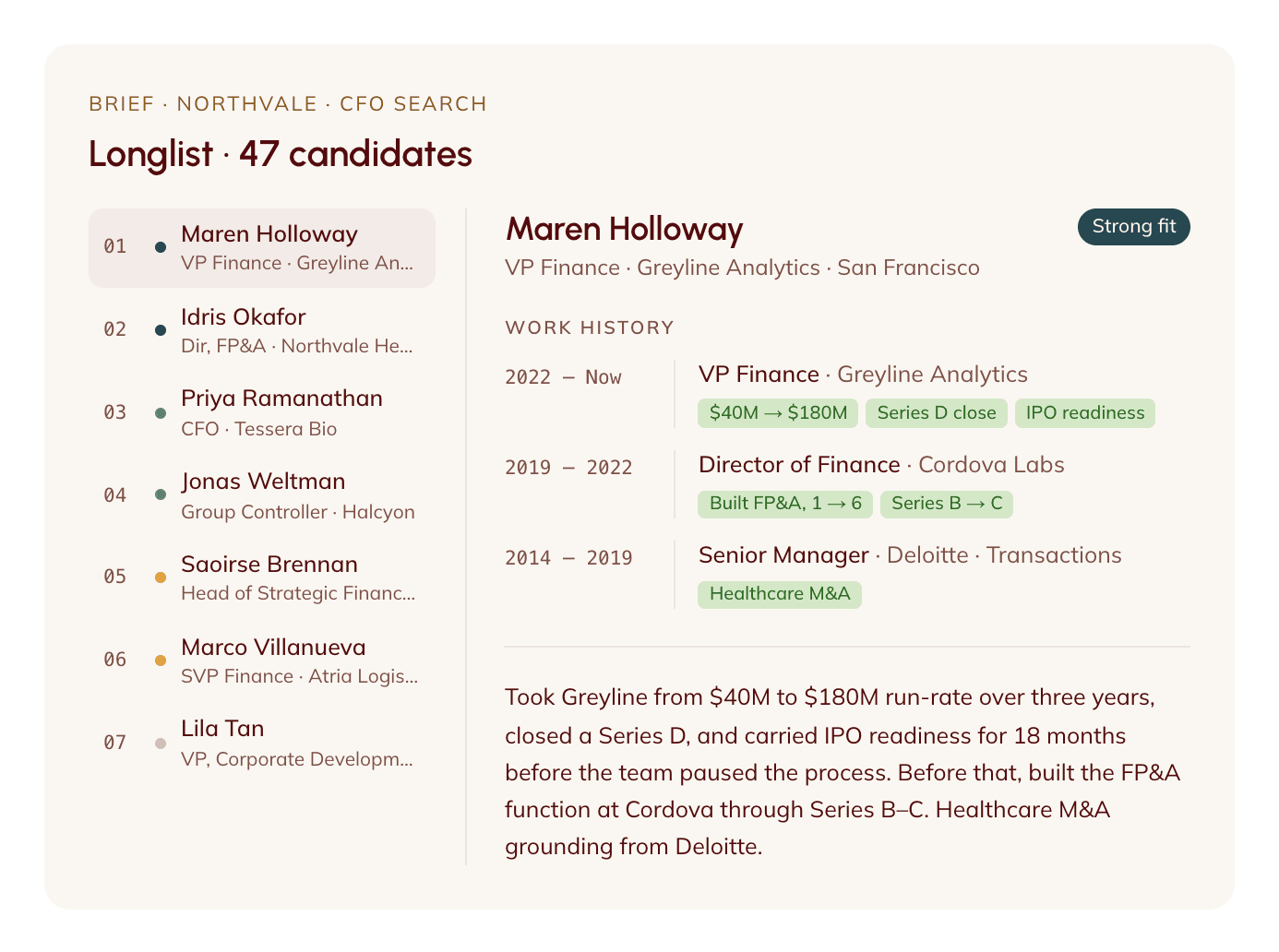
The same brief connects the research, candidate evidence and shortlist your hiring manager reviews.
Research for the next hire
The people your team works with remain in your CRM across searches. When your team stars, notes, contacts or adds a person, the CRM keeps that activity with the relevant brief. When another role opens, your team can return to the people it already knows.
The next search can use the market map to revisit companies and adjacent backgrounds already explored. Your team also has the relationships developed through its own conversations. Working the long-list covers how to coordinate that activity. Measuring a search explains how to connect it with interviews and hires.
FAQ
What exactly will Cruvo search for our role?
The brief establishes which companies, backgrounds and locations matter, including useful adjacent paths and exclusions. You can examine that scope alongside the reasons for selecting individual candidates. The coverage guide explains how to review the market map and discuss a company or person you expected to see.
Will you find people we already rate highly?
Share people you rate and the experience that makes each one relevant. Include any reason they would be unsuitable for this hire. We use those examples to understand your judgement. If an expected name is missing, we can examine the research and the criteria applied to that person.
How do you score experience and career history?
The brief determines which experience we assess. The dossier connects a candidate’s career history, responsibilities and relevant work to those criteria. It also explains the broader fit verdict, which may differ from the score on one dimension. The scoring guide shows how your team can read both together.
Do you know whether candidates would move now?
You establish interest through contact. The dossier explains why a person may fit the role, which helps you start that conversation. Ask about their timing and the terms they would consider, including remote work or a contract. Their answers determine whether it makes sense to continue.
Can you tell us what candidates currently earn?
Ask the candidate about earnings and expectations when you speak. Cruvo needs your budget during the brief to understand the opportunity. An employer or title gives some career context, but it does not tell us what the person earns or what they would accept for this role.
Will Cruvo contact candidates and manage the follow-ups?
Your team contacts candidates and manages follow-ups, interviews and offers. Cruvo finds the people and explains why they fit. The workspace supports your activity with candidate evidence, notes and outreach tracking. Each conversation stays with the team responsible for the hire and becomes part of its own network.
Can we see the work before commissioning a search?
Yes. The public demo shows a sample sourcing engagement and the reasoning behind the candidates. NorthVale and its outreach history are staged. A call can help you assess how the service fits your own hire; the first-search guide explains how a paid engagement starts.
How do we decide whether the search worked?
Follow the candidates from review through contact, replies, interviews and hires. Record costs against the same search and agree a reporting period. These stages show whether the issue is relevance, engagement or later selection. The measurement guide gives a practical method your team can use.
Talk with Cruvo
Tell us where you are with the hire. We can discuss the role, show you how the research works and talk through how your team would use it. You can start with questions or an unfinished brief.
Or email hello@cruvo.app directly.