A talent mapping template for external candidate research
Map target companies, candidate fit, supporting evidence and next steps in one practical spreadsheet. No 9-box grid. No vague list of names.
Opens in Excel, Google Sheets or Numbers. No form or email required.
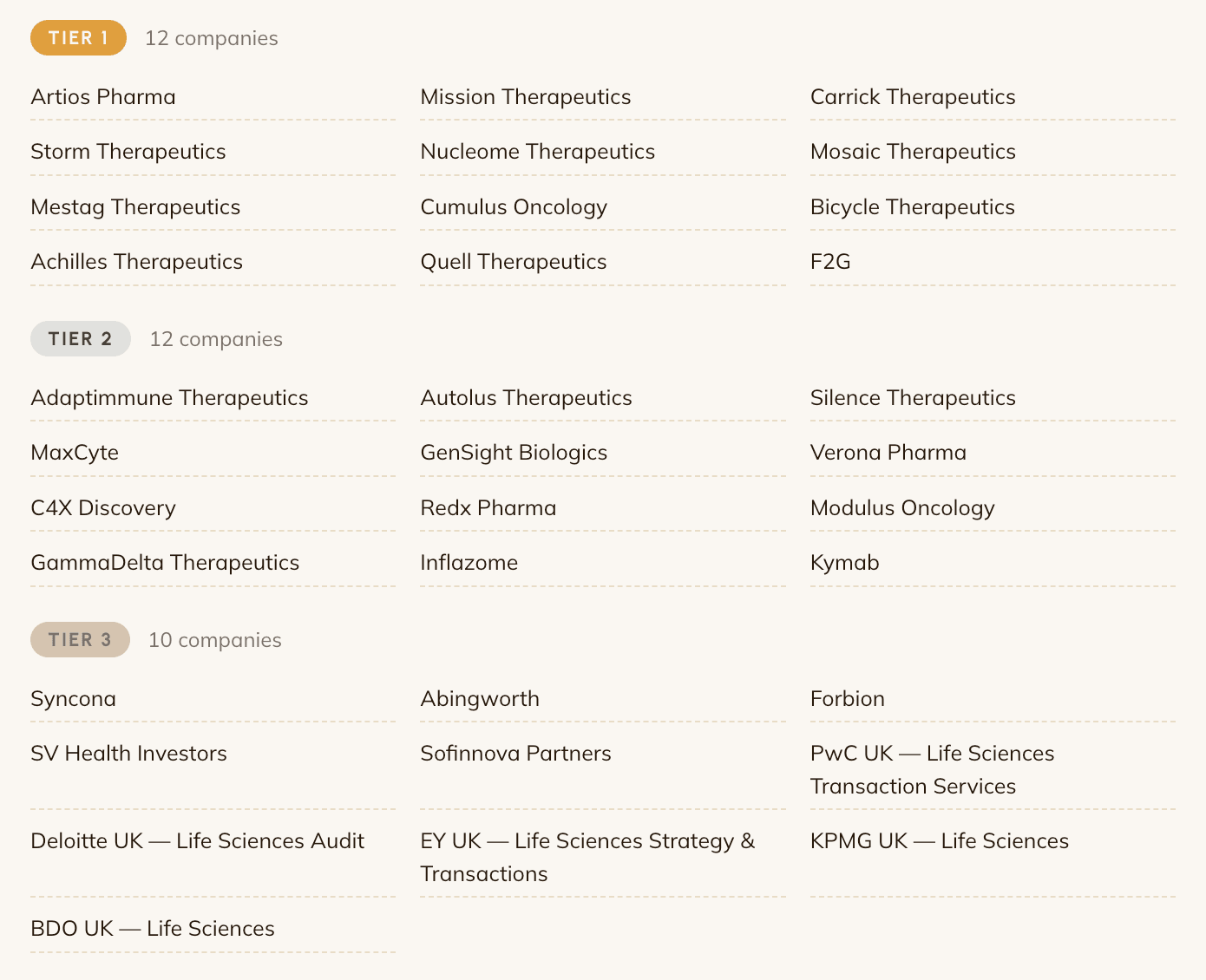
Market map
Target companies grouped by relevance
Two different jobs share one name
This is candidate-market mapping, not succession planning
Many talent mapping templates are 9-box grids for assessing people already inside a company. Recruiters need something different: a live view of the external market, the evidence behind each name and the gaps still left to investigate.
Internal talent map
Who could progress inside the business?
- Assesses current employees
- Often plots performance against potential
- Supports succession and development planning
External candidate map
Where could the right candidate come from?
- Explores companies, sectors and adjacent markets
- Records why each candidate may fit the brief
- Turns research into a long-list and outreach plan
The template
Thirteen fields that keep research useful
A talent map should make the next decision easier. These fields separate a defensible market view from a spreadsheet that simply collects names.
Get the blank templateHow to use the template
Build the market before you judge the names
The order matters. Starting with familiar candidates creates a map of your existing network. Starting with the brief and the market creates a view you can defend to a client.
Turn the brief into research questions
Write down the outcomes, non-negotiable experience, useful adjacencies and open questions. Avoid converting the brief straight into job titles. A title describes where somebody sits today, not whether they can solve the role.
Draw the target-company market
List direct peers first, then add adjacent sectors, suppliers, customers, ownership models and business situations that could produce the same experience. Group companies into tiers and write the reason each group belongs.
Add candidates with evidence
For each person, record a specific fit reason and the source that supports it. “Good background” is not evidence. “Led a European launch across three regulated markets” gives the client something they can test.
Keep uncertainty visible
Use the open-questions field for anything you cannot verify from public information. Do not quietly turn an assumption into a fact. The map becomes more useful when it shows exactly what the first conversation needs to establish.
Calibrate before outreach
Review the first cross-section with the hiring team or client. Show strong fits, adjacent fits and one or two deliberate edge cases. Record what changed, then apply that learning across the rest of the market.
Carry the map into the next search
Update replies, relationship notes and the date each source was checked. A finished search should leave behind more than a submitted slate. It should make the next brief in that market faster and warmer.
A worked example
One row should explain why the name is there
Suppose the brief is for a commercial leader entering a regulated European market. The useful record is not just a name and profile link. It connects the person to the brief and makes the uncertainty explicit.
Choose the right level of help
When the spreadsheet is enough, and when Cruvo fits
The template is deliberately useful on its own. Cruvo is for the searches where doing the research deeply and consistently becomes the constraint.
Use the spreadsheet when
- The market is familiar and tightly defined
- One researcher can investigate every plausible company
- The long-list is small enough to assess consistently
- You already have a reliable place for notes and relationships
Consider Cruvo when
- The brief crosses sectors or uses unfamiliar job titles
- Relevant candidates may sit outside the obvious peer group
- Every name needs the same depth of fit reasoning
- You want each search to build a reusable prospect workspace
Common questions
Talent mapping template FAQ
What is a talent mapping template?
A talent mapping template is a structured place to record the companies, people and evidence that define a candidate market. For external recruitment, it should show why each person fits the brief, what remains uncertain and what happens next.
Is this the same as a 9-box talent grid?
No. A 9-box grid assesses current employees by performance and potential. This template is for external candidate research. It helps a recruiter map a market before deciding who belongs on a long-list.
Should I start with companies or candidates?
Start with the market and target companies. This reduces the risk of building the map around the first familiar names you find. Add candidates only after you can explain why their company, role or experience is relevant.
How often should a talent map be updated?
Update it whenever a profile, company move or conversation changes your view. For a live search, review the map at least once a week and record the date each source was checked.
Can I use this template for executive search?
Yes. It is designed for retained and hard-to-fill searches where the market needs to be explored beyond a familiar database filter. Adjust the evidence fields to match the brief and the client's calibration points.
A harder brief deserves a wider search
Send Cruvo the role your usual research keeps circling
We'll discuss the brief, the market you already know and the adjacent places worth exploring. No public price or self-serve signup required.
Send the brief